


Boilers · Radiators · Radiant Floor Heating

Hydronic heating warms your home with hot water instead of blown air. A boiler heats the water, and quiet pumps send it through radiant floor loops, panel radiators or baseboard. FiXiFY works with a licensed hydronic heating partner to repair, replace and install these systems, from a single boiler repair to a full radiant floor system or a heated driveway.
European comfort, heated with water
In much of Europe, homes are heated with hot water instead of forced air. Here is why it feels different.
- The whole room feels warm. A radiant floor sends gentle heat to everything in the room: you, the walls, the furniture. When the surfaces around you are warm, the room itself feels warm, not just the air. The warmth is soft and even, with no drafts and no cold floors.
- Quiet. No blower kicking on, no air rushing out of vents.
- Doesn’t feel dry. No hot air blowing across your skin, and the house is comfortable at a lower air temperature, which keeps the relative humidity a little higher. In Colorado’s dry climate you feel the difference.
- Less dust. No blower pushing dust and allergens through ducts and around the house.
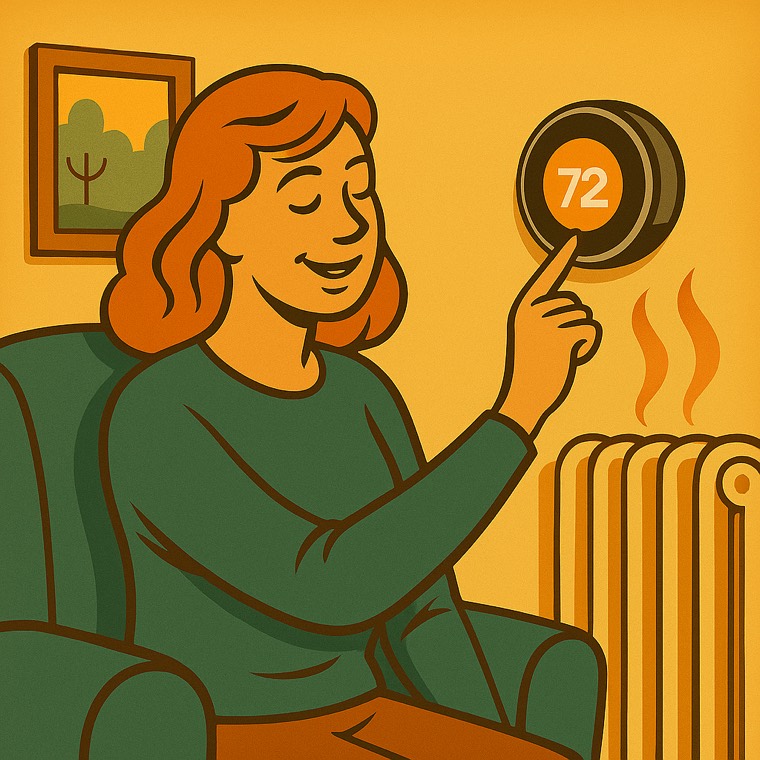
- Comfort at a lower setting. Many people feel comfortable with the thermostat set 2–4 °F lower than with forced air.
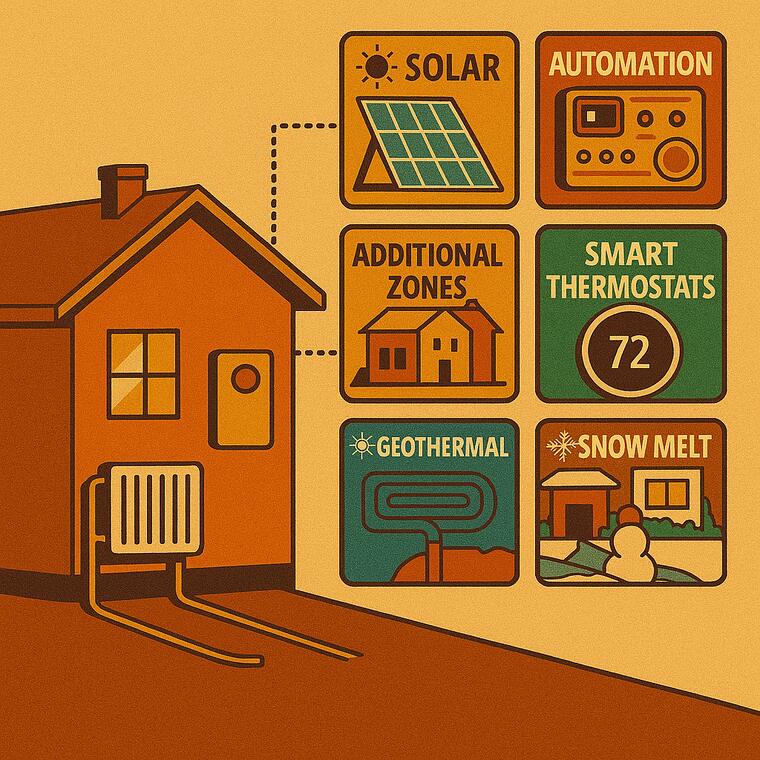
- Zones, and one system for heat and hot water, with room to add a smart thermostat, extra zones, solar or snow melt later.
What we do

Boiler repair or replacement
No heat, pressure loss, leaks, banging or “kettling”, short cycling, error codes. When a repair no longer makes sense: a new high-efficiency condensing or combi boiler sized to your home, with the old unit removed.

Radiant floor heating
New systems for remodels, basements, additions and new builds, with zone controls for each area.
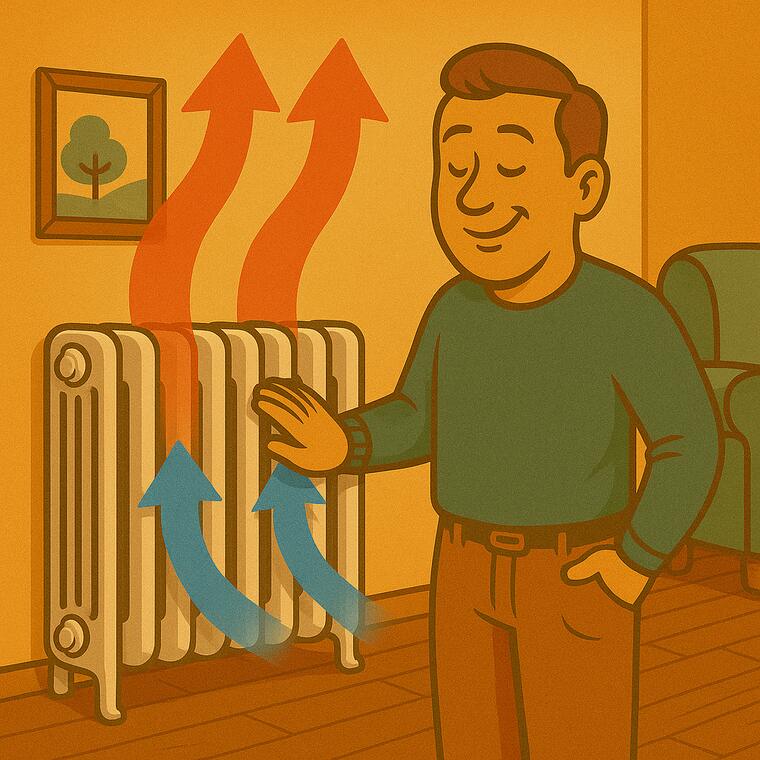
Radiators, baseboard & towel warmers
Add heat where the floor can’t do it alone, or replace tired old radiators. They warm a room mostly by natural convection: cool air passes through, warms up and rises on its own, with no fan and no noise.

Indirect water heaters
The boiler heats your domestic hot water too, with fast recovery and no second burner.

Heated driveways, patios & walkways
Snow and ice melt away without shoveling: driveways, walkways, front steps, patios and porches. See how
Annual maintenance
System inspection, boiler tune-up and efficiency check, safety controls test, pumps and valves, radiant floor temperature check.

Heated driveways, patios & walkways
The same boiler that heats your floors can keep the outside clear. Tubing filled with a water-and-glycol (antifreeze) mix runs under the concrete or pavers. Switch it on when snow is coming, and the surface stays clear.
- No shoveling, no ice. With the system on, driveways, walkways, front steps, patios and porches clear themselves.
- No salt. Concrete and pavers last longer without de-icers, and nothing gets tracked into the house.
- Safer. No icy steps for kids, older parents or guests.
- Best time to add it: when you pour new concrete or replace pavers, so the tubing goes in under the new surface.
Signs your boiler needs service
- No heat, or the heat comes and goes
- The pressure gauge keeps dropping, or there is water around the boiler or pipes
- Banging, gurgling or “kettling” noises
- The boiler turns on and off every few minutes
- An error code on the display, or the pilot keeps going out
- Gas bills climbing even though you heat the house the same way
- The boiler is 10 years old or more
Repair or replace?
Modern boilers generally don’t last as long as the old cast-iron ones. The most basic, low-cost models (the “Good” tier below) often start needing major repairs after about 10 years, and at that point replacing the boiler is usually a better investment than repairing it. Higher-end boilers that are installed and maintained well often run 15–20 years, and they are usually worth repairing. You get a straight answer and a written quote either way.
Equipment: good, better, best
We quote in three tiers, so you can choose between price, efficiency and features.
How it works
- Send us your project or request online, or call (303) 214-1240. Tell us what you have (boiler brand, age, the problem) or what you want to build.
- Site visit. Our licensed heating partner inspects the system and gives you a written quote.
- Permits. Where the city requires a permit, the partner pulls it.
- The work. Repair, replacement or installation, then a full system check.
- Maintenance. An optional yearly tune-up keeps the system efficient and catches problems early.
Questions
Do you repair boilers?
Yes, through our licensed heating partner: gas and electric boilers, combi boilers, pumps, zone valves, controls and leaks. If a repair doesn’t make sense, you get a straight answer and a replacement quote.
Can radiant floor heating be added to an existing home?
Often, yes, in a remodel, a basement finish or a new addition, and sometimes from below through an open basement ceiling. The site visit tells you what fits your floors.
How much does radiant floor heating cost?
It depends on the system. Prices vary widely between manufacturers, system designs and components: the same part, such as the tubing, can cost several times more from a premium maker than from a basic one. That is why we quote two or three equipment levels. The site visit gives you an exact written quote.
Can you heat my existing driveway or patio?
The tubing has to go under the surface, so it is usually added when the concrete is replaced or new pavers are laid. If you are planning new concrete, plan the snow melt at the same time.
Is radiant heating worth it in Colorado?
In a cold, dry climate it is one of the most comfortable ways to heat a home: warm floors and surfaces, no blowing air, and often a lower thermostat setting.
Do I need a permit?
Boiler replacement and new heating systems need a mechanical permit in Denver and most suburbs. Our partner pulls it.
Which areas do you cover?
The Denver Metro, plus Evergreen and Conifer.
Send us your project
Send a request or call (303) 214-1240.